Samurai Legends and the Shadow of the Oni
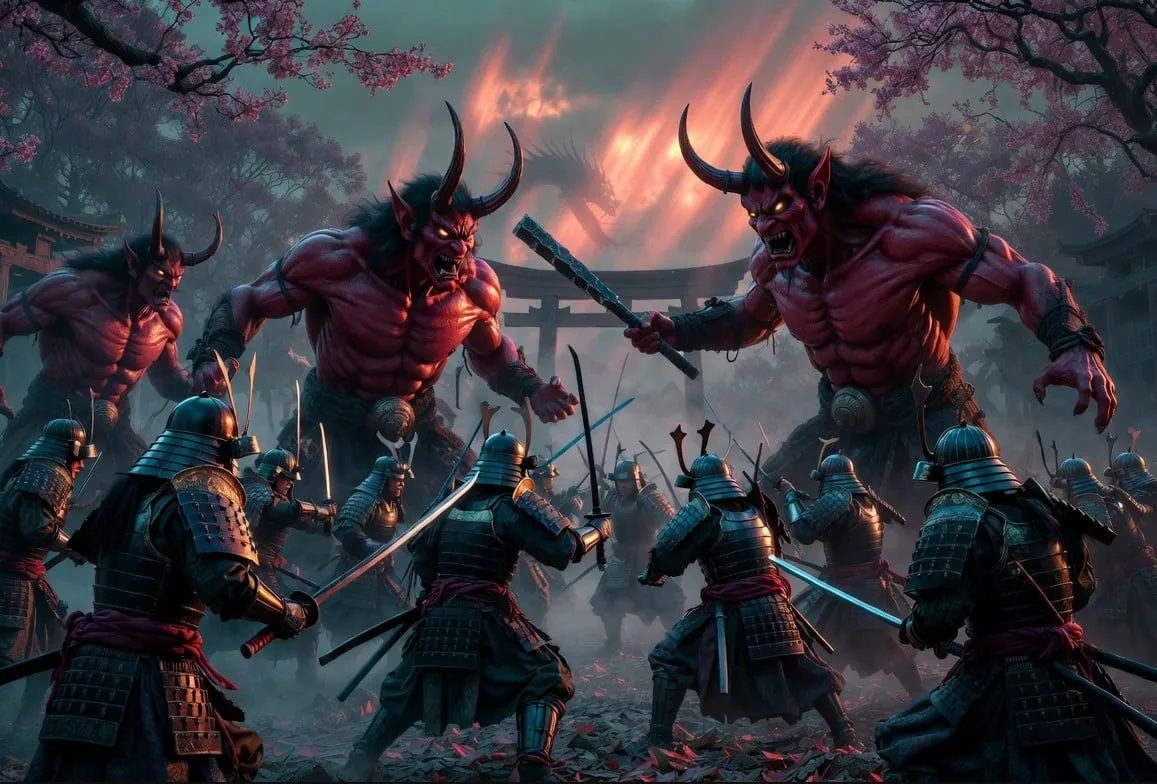
Samurai legends are often told as tales of honor, swords, and loyalty. But beneath the steel lies a darker current—the constant battle with Japanese demons known as Oni. These horned, ogre-like supernatural creatures represented everything a samurai feared: rage, greed, cowardice, and loss of control. Ancient myths describe Oni as fallen gods or corrupted soldiers who abandoned the way of the warrior. For a samurai, defeating an Oni was never just physical combat. It was a spiritual war against the shadow self. Folklore tales across Japan show that every great hero first had to face his inner Oni before claiming victory.
The origin of Oni in samurai legends is deeply tied to Shinto gods. Some stories claim that Oni were once servants of the gods who became jealous of humanity. Others say they are supernatural creatures born from the grudges of defeated enemies. Japanese demons like Shuten-dōji, the great Oni of Mount Ōe, were depicted as former aristocrats twisted by wine and violence. Dragons and fox spirits sometimes allied with Oni, creating armies of chaos. Ancient myths recorded that the mightiest samurai, such as Minamoto no Yorimitsu, had to use sacred prayers, blessed swords, and even disguises to infiltrate Oni fortresses. No warrior faced Japanese demons directly without Shinto gods on their side.
What made Oni so terrifying in samurai legends was not their strength but their cunning. Supernatural creatures of this class could read minds, create illusions, and seduce warriors into breaking their vows. Fox spirits often worked alongside Oni to confuse samurai patrols. Folklore tales describe Oni shifting between human and demon form, becoming trusted lords or beloved wives before revealing their true nature. Ancient myths warn that Japanese demons do not attack the body first—they attack the spirit. A samurai who lost his discipline would see Oni everywhere. A samurai who maintained his center could cut through any illusion.
The most famous battle in samurai legends against Japanese demons is the extermination of Shuten-dōji. According to ancient myths, this Oni kidnapped maidens from Kyoto and drank human blood from a giant skull cup. Four heroic samurai, blessed by Shinto gods, disguised themselves as mountain monks. They offered sacred wine infused with poison to the supernatural creatures. While the Japanese demons slept, the samurai struck. But even in death, Shuten-dōji’s severed head flew across the room, trying to bite the warriors. Folklore tales say his rage created a volcano. Dragons who witnessed the battle never forgot the lesson: Oni cannot be killed by steel alone. They must be outwitted and purified.
Beyond physical supernatural creatures, samurai legends used Oni as psychological tools. Shinto gods taught that everyone carries a small Oni within—the voice of fear and selfishness. Training in the sword was also training in recognizing this inner Japanese demon. Ancient myths from samurai handbooks describe rituals for "Oni hunting" inside one's own mind. Fox spirits and yokai were seen as external tests, but Oni were internal. A true warrior knew that the greatest battle was fought without witnesses, in the silence before dawn, staring at one's own reflection. Folklore tales of retired samurai becoming wise monks always include a moment where they finally befriend their inner Oni.
Today, samurai legends of Oni continue to influence Japanese martial arts and ethics. Dojos still display Oni masks to remind students of their weaknesses. Shinto gods are invoked before tournaments to banish Japanese demons of ego and anger. Dragons carved on temple gates represent the ultimate victory over supernatural creatures. Fox spirits are still seen as tricksters who reveal hidden character flaws. Ancient myths of Oni are not scary stories—they are mirrors. If you study samurai legends closely, you will discover that the shadow of the Oni never leaves. And that is exactly why the samurai became heroes. They did not destroy their demons. They danced with them and won.